
Understanding Your Tax Status in Ireland

Residence, Ordinary Residence, and Domicile Explained
Navigating Irish tax rules can be simpler than it looks, once you know the basics. Three key terms decide how much tax you pay: residence, ordinary residence, and domicile. Understanding these will help you manage your taxes and avoid unexpected bills.
What Does It Mean to Be a Resident?
You are a tax resident in Ireland if you:
- Spend 183 days or more in Ireland in one calendar year, or
- Spend 280 days or more in Ireland over two consecutive years.
If you meet either rule, you may pay tax in Ireland on income earned here and possibly on foreign income as well.
Example: If you live in Ireland from January to July (over 183 days) in one year, you are considered a tax resident for that year.
What Is Ordinary Residence?
You become ordinarily resident when you have been a tax resident for three consecutive years. This status changes how foreign income and assets are taxed.
You will keep this status until you live outside Ireland for three full years in a row.
Example: Emma lived in Ireland for three years. In her fourth year, she became ordinarily resident, which changed how her foreign investments were taxed.
Understanding Domicile
Domicile means your permanent home country. You normally get your domicile at birth. It can change only if you move abroad and intend to live there permanently.
Example: Liam was born in Ireland (domicile of origin). He moved to Canada and decided to stay there forever. He now has a Canadian domicile of choice.
How These Affect Your Taxes
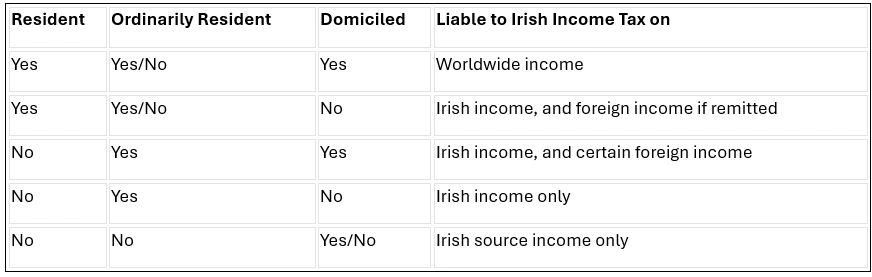
- Worldwide income = income from anywhere in the world.
- Irish income = income earned in Ireland.
- Foreign income if remitted = income from abroad brought into Ireland.
Tips to Stay Compliant
- Track your days in Ireland to know your residency status.
- Review your tax obligations regularly so you know what income is taxable.
- Get professional advice if you have foreign assets or multiple sources of income.
Need help with your Irish tax status?
Richard O’Shea Consultancy offers expert tax and accounting services for individuals and businesses in Ireland. Contact us today to book a consultation.
This article is intended for informational purposes only and should not be considered a replacement for professional advice. The author(s) disclaim any liability for actions taken or not taken based on the content of this document. It is recommended to seek tailored advice before making any decisions related to the topics discussed in this article.