
Buying a Company Vehicle in Ireland: Hire Purchase, Leasing or Buying Outright?
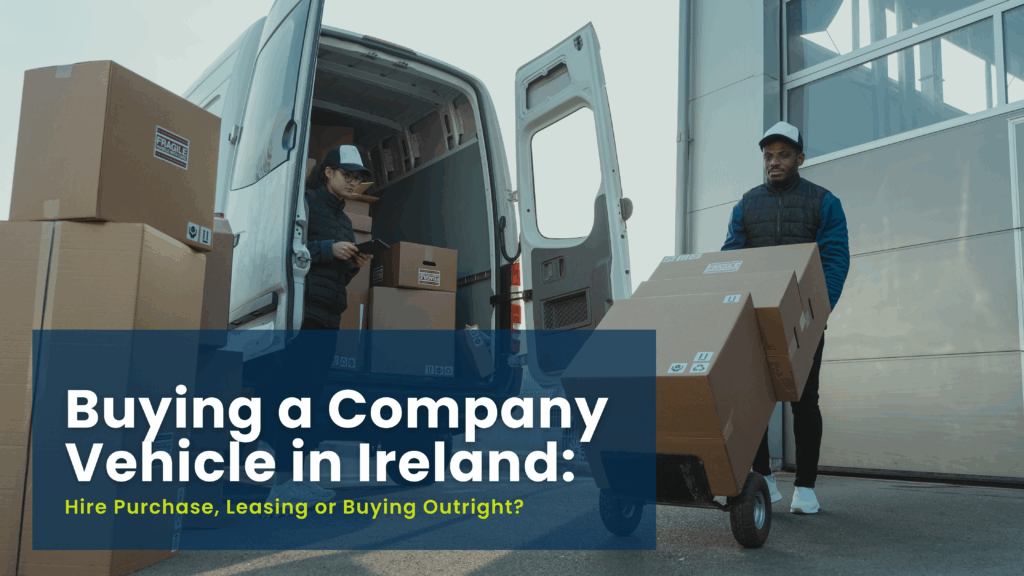
Buying a company vehicle is a common decision for Irish business owners.
However, the way you finance the purchase can have a significant impact on your tax position, cash flow, and overall cost.
Many businesses focus only on the price of the vehicle. In practice, the structure of the purchase is just as important.
This guide explains how Irish businesses can finance a company vehicle and the tax implications of each option.
We cover the main options available in Ireland:
- Hire purchase
- Lease agreements (operating and finance leases)
- Buying outright
- Bank loan with outright purchase
Why the Structure Matters
Before choosing how to finance a vehicle, it is important to understand the wider impact.
Your choice can affect:
- Cash flow
- Corporation tax relief
- VAT treatment
- Ownership of the asset
- Balance sheet position
Therefore, selecting the right option depends on your business needs rather than just affordability.
Option 1: Hire Purchase (HP)
Hire purchase is one of the most common ways businesses acquire vehicles. In practice, it is often used where businesses want ownership over time.
Under this structure:
- You pay a deposit upfront
- The balance is paid in instalments
- Ownership transfers to you at the end of the agreement
Tax Treatment
- The vehicle is treated as a company asset
- Capital allowances may be available (subject to limits)
- Interest on repayments is generally deductible
Although legal ownership does not pass until the final payment is made, for tax purposes the business is generally treated as owning the asset from the outset.
When It Works Well
Hire purchase may suit businesses that:
- Want to own the vehicle
- Prefer spreading the cost over time
- Have stable cash flow
Option 2: Lease Agreements
With a lease, the company pays to use the vehicle rather than own it. In practice, there are two main types of lease used by Irish businesses.
Operating Lease
Under this structure:
- You pay for the use of the vehicle over a fixed term
- Ownership does not transfer
- The vehicle is usually returned at the end
- Any option to purchase is typically at market value
Tax Treatment
- Lease payments are generally deductible as a business expense
- No capital allowances are available
- Deductions may be restricted depending on CO₂ emissions
- VAT is charged on each lease payment
When It Works Well
Operating leases may suit businesses that:
- Want low upfront costs
- Prefer predictable monthly expenses
- Upgrade vehicles regularly
Finance Lease
Under this structure:
- The business pays for most or all of the vehicle’s value over the lease term
- The lease typically runs for most of the asset’s useful life
- Ownership does not automatically transfer
- There may be an option to purchase the vehicle at the end
Tax Treatment
- Lease payments are generally deductible as a business expense
- VAT is charged on each payment
- No capital allowances are available
- Deductions may be restricted depending on emissions
When It Works Well
Finance leases may suit businesses that:
- Want to spread the cost over time
- Do not require immediate ownership
- Are acquiring vehicles for long-term use
Option 3: Buy Outright (Cash Purchase)
This involves purchasing the vehicle using company funds.
Tax Treatment
- The vehicle is recorded as a company asset
- Capital allowances can be claimed over time
- No interest costs arise
However, capital allowances on passenger vehicles are subject to limits. For example, there is a cap on the allowable cost (generally €24,000), along with restrictions based on emissions.
Cash Flow Consideration
While buying outright avoids finance costs, it can significantly reduce short-term cash flow. Therefore, this option is best suited to businesses with strong reserves.
When It Works Well
Buying outright may suit businesses that:
- Have strong cash reserves
- Want to avoid finance costs
- Prefer full ownership immediately
Option 4: Bank Loan and Buy Outright
This option combines borrowing with ownership.
The company takes out a loan and purchases the vehicle outright.
Tax Treatment
- Capital allowances may be claimed (subject to limits)
- Interest on the loan is generally deductible
- The vehicle is treated as a company asset
In most cases, capital allowances are not affected by how the vehicle is financed.
Cash Flow Consideration
Compared to buying outright, this option helps preserve cash. However, it introduces ongoing repayment obligations.
When It Works Well
This may suit businesses that:
- Want ownership but prefer not to use cash reserves
- Have access to favourable loan terms
Comparison: Hire Purchase vs Lease vs Buy Outright vs Bank Loan
The table below summarises the key differences between each option.
| Option | Ownership | Upfront Cost | Monthly Payments | Tax Treatment | Cash Flow Impact | Best For |
|---|---|---|---|---|---|---|
| Hire Purchase (HP) | Yes (end of term) | Medium (deposit) | Fixed instalments | Capital allowances + interest deductible | Moderate | Businesses wanting ownership over time |
| Operating Lease | No | Low | Fixed payments | Lease payments deductible (restrictions may apply) | Low (predictable) | Businesses wanting flexibility and upgrades |
| Finance Lease | No (similar in substance to ownership) | Low–Medium | Fixed payments | Lease payments deductible (restrictions may apply) | Moderate | Long-term use without immediate ownership |
| Buy Outright | Yes (immediate) | High | None | Capital allowances (subject to limits) | High (cash outflow upfront) | Businesses with strong cash reserves |
| Bank Loan + Buy | Yes (immediate) | Low–Medium | Loan repayments | Capital allowances + interest deductible | Moderate | Businesses wanting ownership without using cash |
Key Considerations Before Deciding
There is no single “best” option. Instead, the right approach depends on your business.
Before deciding, consider:
- Cash flow position
- Expected use of the vehicle
- Tax implications
- Long-term plans (e.g. upgrading vehicles)
- Financing costs
In addition, VAT treatment and benefit-in-kind (BIK) implications may also arise depending on how the vehicle is used.
Common Mistakes Businesses Make
In practice, many businesses:
- Choose based only on monthly cost
- Overlook capital allowance restrictions
- Ignore emissions-related tax limitations
- Do not consider cash flow impact
- Fail to plan for long-term ownership
However, most of these issues can be avoided with proper planning.
How We Help
At Richard O’Shea Consultancy, we help businesses assess the financial and tax impact of purchasing company vehicles.
This includes:
- Comparing financing options
- Reviewing tax treatment and allowances
- Assessing cash flow implications
- Ensuring decisions align with wider business planning
Decisions like this are often best reviewed as part of ongoing financial management.
For many clients, this forms part of our Monthly Accounting Services, where key financial decisions are reviewed throughout the year.
In addition, some businesses use financial projections to assess the long-term impact of vehicle purchases before committing.
Final Thoughts
Buying a company vehicle is not just a purchase decision. Instead, it is a financial and tax decision.
Hire purchase, leasing, and outright purchase each have different implications. Therefore, the right choice depends on your business’s cash flow, tax position, and long-term plans.
If you are unsure which option is most efficient, a short review can help avoid costly mistakes.
This article is intended for informational purposes only and should not be considered a replacement for professional advice. The author(s) disclaim any liability for actions taken or not taken based on the content of this document. It is recommended to seek tailored advice before making any decisions related to the topics discussed in this article.
Continue Reading…
TaxTax & Accounting Services
Richard OShea
April 30, 2026
0
R&D Tax Credit Ireland: How Irish Companies Can Claim Relief
Learn how Irish companies can claim R&D tax credits, reduce corporation tax, and benefit from innovation incentives.
Read more
AccountingBusinessFinanceTax & Accounting Services
Richard OShea
April 24, 2026
0
Financial Projections Ireland: How SMEs Plan Growth and Cash Flow
Learn how financial projections help Irish SMEs plan growth, manage cash flow, and make informed decisions using structured financial models.
Read more
AccountingBusinessTaxTax & Accounting Services
Richard OShea
April 17, 2026
0
Corporation Tax Deadlines Ireland: Key Dates and Filing Requirements
Learn the key corporation tax deadlines in Ireland, including filing dates, preliminary tax rules, and requirements for small and large companies.
Read more

AccountingBusinessTaxTax & Accounting Services
Richard OShea
April 14, 2026
0
Group Relief Ireland: How Companies Use Losses Across a Group
Learn how group relief works in Ireland and how companies can use losses across a group to reduce corporation tax and improve cash flow.
Read more
TaxTax & Accounting ServicesTax Updates Ireland
Richard OShea
April 5, 2026
0
Corporation Tax Losses in Ireland: What Companies Can Do With Losses
Learn how companies in Ireland can use corporation tax losses, including carrying losses back, forward, and using group relief to reduce tax.
Read more

BusinessCompany FormationTaxCompliance & International Business
Richard OShea
March 27, 2026
0
Setting Up an Irish Company: What International Businesses Need to Know
Learn how to set up an Irish company, including structure, tax residency, and compliance requirements for international businesses expanding into Ireland.