
Should Plant and Machinery Be Held in a Separate Company?
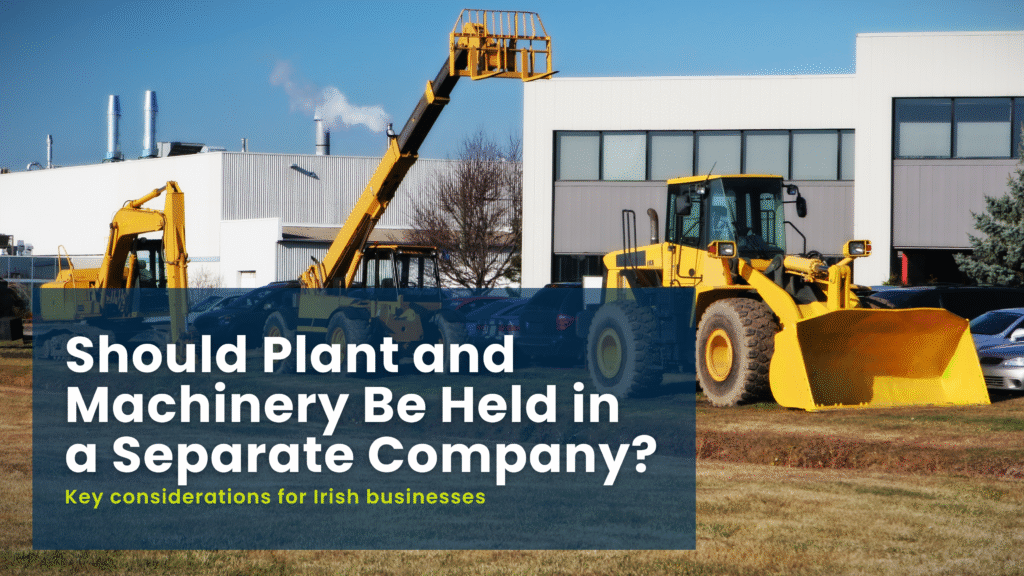
For many businesses, plant and machinery represent some of their most valuable assets.
Whether it is excavators, telehandlers, agricultural machinery, trucks, vans, or specialist equipment, these assets often require significant investment and long-term financing.
As businesses grow, an important question can arise:
Should plant and machinery be owned by the trading company, or should they be held in a separate company?
There is no one-size-fits-all answer. The right approach depends on the size of the business, the value of the assets, financing arrangements, and long-term commercial objectives.
In this article, we explore some of the key considerations.
Why Ownership Structure Matters
When a business purchases equipment, many owners naturally buy it through their trading company.
For many businesses, this is the simplest and most practical option.
However, as asset values increase, some businesses begin to consider whether valuable plant and machinery should be owned separately from the day-to-day trading activities of the business.
This is particularly common in sectors such as:
- Construction
- Engineering
- Agriculture
- Haulage and transport
- Manufacturing
In these industries, equipment can represent a significant proportion of the overall value of the business.
Buying Through the Trading Company
For many SMEs, purchasing equipment through the trading company is the most straightforward approach.
Advantages may include:
- Simpler administration
- Easier bookkeeping and record keeping
- Straightforward financing arrangements
- Direct ownership by the operating business
In addition, capital allowances may be available on qualifying plant and machinery, helping to reduce taxable profits over time.
As a result, this structure is often appropriate for smaller and growing businesses.
Using a Separate Plant and Machinery Company
In some situations, businesses choose to hold plant and machinery in a separate company rather than the trading company itself.
The separate company owns the assets and may lease them to the trading company.
This type of structure is more commonly seen in larger businesses or groups with significant equipment investments.
However, it is important to understand that creating a separate company is not automatically beneficial and introduces additional complexity.
Furthermore, any leasing arrangements between companies should be properly documented and structured to ensure the correct tax, legal, and accounting treatment applies.
Commercial and Organisational Considerations
One reason some businesses consider a separate ownership structure is to distinguish asset ownership from day-to-day trading activities.
Where plant and machinery are owned by a separate company, the assets can be managed independently from the trading operations that use them.
One of the most common reasons businesses consider a separate plant and machinery company is to isolate valuable equipment from the day-to-day trading risks of the operating business. Where correctly structured, the assets are owned by the separate company and leased to the trading company.
If the trading company encounters financial difficulties, the plant and machinery may not form part of the trading company’s assets available to creditors. However, the effectiveness of any structure will depend on the specific circumstances, financing arrangements, guarantees, and legal documentation involved.
In some business groups, separating asset ownership from trading activities can also provide organisational and commercial advantages. However, the suitability of any structure depends on the specific circumstances of the business.
As a result, businesses should seek professional advice before deciding whether a separate ownership structure is appropriate.
Financing Considerations
Financing is often one of the most important factors when purchasing plant and machinery.
Many businesses acquire equipment through:
- Hire purchase agreements
- Leasing arrangements
- Asset finance facilities
- Bank loans
The ownership structure can affect how lenders view the transaction.
For example:
- Personal guarantees may be required
- Security arrangements may differ
- Lending criteria may vary
- Financing costs may change
Therefore, financing implications should be considered before deciding on the ownership structure.
Tax Considerations
Tax should form part of the decision-making process, but it should not be the only consideration.
Businesses should consider:
- Capital allowances on qualifying assets
- Corporation tax implications
- VAT treatment
- Lease arrangements between companies
- Future disposal of the assets
Where plant and machinery are held in a separate company and leased to a trading company, additional tax considerations may arise. These can include the treatment of lease payments, capital allowances, VAT, and the interaction between connected companies.
Therefore, professional advice should be obtained before implementing any ownership structure.
In practice, a structure that works well commercially often produces better long-term outcomes than one driven solely by tax considerations.
When a Separate Company May Make Sense
A separate plant and machinery company may be considered where:
- The business owns a large equipment fleet
- Significant investment has been made in machinery
- Multiple trading companies operate within a group
- Long-term asset ownership is a key strategic consideration
In these situations, a separate ownership structure may support broader commercial, organisational, or group planning objectives.
However, each case should be reviewed individually.
When Simplicity Is Often Better
For many owner-managed businesses, the simplest structure is often the most practical.
Purchasing equipment directly through the trading company may provide:
- Lower administration costs
- Simpler compliance obligations
- Easier financing arrangements
- Straightforward accounting treatment
As a result, many SMEs find that the additional complexity of a separate company does not justify the potential benefits.
Trading Company vs Separate Asset Company
|
Consideration |
Trading Company Owns Assets |
Separate Asset Company Owns Assets |
|
Administration |
Simpler |
More complex |
|
Compliance Costs |
Lower |
Higher |
|
Financing |
Often simpler |
May require additional structuring |
|
Record Keeping |
Straightforward |
More involved |
|
Asset Ownership |
Combined with trading activities |
Separate from trading activities |
|
Group Flexibility |
More limited |
Potentially greater flexibility |
|
Suitable For |
Many SMEs |
Larger or more complex businesses |
How We Help
At Richard OShea Consultancy, we help business owners assess the commercial, tax, and financial implications of major investment decisions.
This includes:
- Reviewing ownership structures
- Assessing financing options
- Evaluating tax implications
- Supporting long-term business planning
Understanding the long-term cash flow impact can help ensure investment decisions support future growth rather than creating unnecessary financial pressure.
Businesses may also benefit from our Monthly Accounting Services, where major capital expenditure decisions can be reviewed as part of ongoing financial planning.
Final Thoughts
Plant and machinery often represent a significant investment for growing businesses.
While many businesses choose to own equipment through their trading company, others may consider a separate ownership structure as part of a broader commercial strategy.
The right approach depends on factors such as asset value, financing requirements, business structure, and long-term objectives.
Before making a decision, it is important to assess both the commercial and tax implications to ensure the structure supports the future needs of the business.
This article is intended for informational purposes only and should not be considered a replacement for professional advice. The author(s) disclaim any liability for actions taken or not taken based on the content of this document. It is recommended to seek tailored advice before making any decisions related to the topics discussed in this article.
Frequently Asked Questions
1. Should plant and machinery be owned by the trading company?
For many SMEs, owning plant and machinery through the trading company is often the simplest and most practical option. However, larger businesses may consider alternative structures depending on their circumstances.
2. Can a separate company own business equipment?
Yes. In some cases, a separate company may own plant and machinery and lease the assets to a trading company.
3. Are capital allowances available on plant and machinery?
In many cases, businesses can claim capital allowances on qualifying plant and machinery. The standard rate is generally 12.5% per year over eight years, although the exact treatment depends on the nature of the asset and how it is acquired.
4. Why do some businesses use a separate company to own plant and machinery?
Some businesses choose to separate asset ownership from trading activities for commercial, organisational, financing, or long-term planning reasons.
However, there is no single structure that suits every business. The appropriate approach depends on the size of the business, the value of the assets, financing arrangements, and long-term objectives.
5. Should tax be the main factor when choosing an ownership structure?
No. Tax is important, but financing, administration, commercial objectives, and long-term business plans should also be considered.